
Equal opportunities session
Wednesday May 20th - 18:00 pm - Theater at Casino Barrière Deauville
Abstract
Research into gender equality in physics frequently reveals a number of notable issues. These include the waste of talent, the lack of significant progress, and the implementation of merely symbolic changes*. This is a matter of concern given that, since the early 2000s, measures aimed at promoting gender equality in physics have been in place in many European research centres, universities, and schools. For almost two decades, it has been imperative to consult with equal opportunities officers prior to the appointment of any new personnel, to include equal opportunity measures in every project proposal, etc. Nevertheless, physics continues to exhibit one of the lowest rates of gender diversity of all STEM subjects. Accelerator physics demonstrates a particularly pronounced disparity. This lack of success calls for a more profound examination. As gender equality in physics is a social and historical phenomenon, we ask a sociologist and a historian specialising in gender equality in science the following questions: The central question is whether real progress has been made in terms of gender equality in physics in Europe between 2010 and 2025. If not, why not? If so, what progress has been made? Which factors have been most effective? Why did it work? What measures will be adequate in future?
See for example:
https://doi.org/10.1038/s42005-024-01579-9
https://members.eps.org/blogpost/751263/505063/Best-practices-of-Equal-Opportunity-Committees-discussed-at-annual-congress-of-SIF
https://levana.leopoldina.org/receive/leopoldina_mods_00688)
Speakers
Beate Ceranski
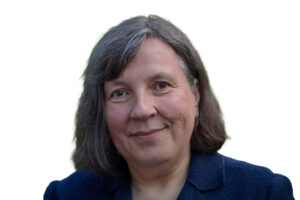
Beate Ceranski is a historian of science and technology at the University of Stuttgart. After studying physics, mathematics and protestant theology at the University of Bonn she obtained her Ph.D. in the history of science at the University of Hamburg. Her dissertation on the Bolognese physicist Laura Bassi won several prizes, and the history of women in science has remained one of her main areas of expertise ever since. Beate Ceranski has also done extensive research on the history of radioactivity research and the history of universities and participated in an interdisciplinary VR 3D preservation project of gyro instruments. She has curated several exhibitions, most recently on the Stuttgart university collections (Stuttgart 2022) and has appeared in radio and TV contributions on the history of women in science.

Ewelina Ciaputa
Ewelina Ciaputa is a sociologist and researcher at the Institute of Sociology, Jagiellonian University in Kraków. Her work focuses on gender equality and gender equality mainstreaming in academic context. Her scholarly contributions to the field of gender equality in science include co-authorship of studies examining structural inequalities in physics, such as Gender dimensions of physics: a qualitative study from the European Research Area and Gendered excellence in physics, which explore the mechanisms shaping gendered experiences within academic physics across Europe. Ewelina Ciaputa has been actively involved in several major European research projects dedicated to advancing gender equality in research and innovation. Notably, she contributed to GENERA: Gender Equality Network in the European Research Area, a project explicitly focused on improving gender equality within physics institutions in Europe. She has also worked on initiatives such as INSPIRE, RESISTIRE, UniSAFE, and CASPER, all aimed at strengthening gender equality policies, counteracting gender-based violence, and supporting institutional change in higher education and research organizations. Since 2023, she has additionally coordinated the Gender Equality Plan at Jagiellonian University, contributing to systemic transformations that foster more inclusive academic environments.