
Equal opportunities session
Wednesday May 20th - 18:00 pm - Theater at Casino Barrière Deauville
Women in Physics: The Ambivalence of Success, Forces of Inertia and Pathways to Equity
This talk explores why gender inequality in physics can persist—even when individual women succeed. We begin by unpacking the risks of the meritocracy narrative in science: “merit” is often presented as neutral, yet real careers are shaped by networks, power, and institutional gatekeeping. We then provide a concise snapshot of women’s representation across STEM fields, highlighting persistent vertical segregation and pronounced differences between disciplines and geographical settings.
Drawing on historical and contemporary perspectives, we identify key enablers (such as access to resources and supportive networks) and recurring hindrances, including competitive lab cultures, informal exclusion, and the cumulative impact of everyday biases. We argue that these factors interact systemically, creating self-reinforcing feedback loops: underrepresentation in prestige areas can translate into fewer senior authorships, awards, funding opportunities, and slower promotion—thereby reproducing inequality over time.
Finally, we ask what is special about accelerator physics and we outline practical pathways to equity and equality that also improve working conditions for everyone.
See for example:
https://doi.org/10.1038/s42005-024-01579-9
https://members.eps.org/blogpost/751263/505063/Best-practices-of-Equal-Opportunity-Committees-discussed-at-annual-congress-of-SIF
https://levana.leopoldina.org/receive/leopoldina_mods_00688)
Speakers
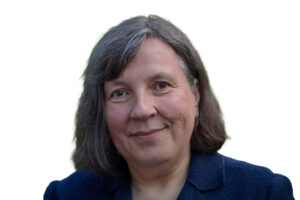
Beate Ceranski
Beate Ceranski is a historian of science and technology at the University of Stuttgart. After studying physics, mathematics and protestant theology at the University of Bonn she obtained her Ph.D. in the history of science at the University of Hamburg. Her dissertation on the Bolognese physicist Laura Bassi won several prizes, and the history of women in science has remained one of her main areas of expertise ever since. Beate Ceranski has also done extensive research on the history of radioactivity research and the history of universities and participated in an interdisciplinary VR 3D preservation project of gyro instruments. She has curated several exhibitions, most recently on the Stuttgart university collections (Stuttgart 2022) and has appeared in radio and TV contributions on the history of women in science.

Ewelina Ciaputa
Ewelina Ciaputa is a sociologist and researcher at the Institute of Sociology, Jagiellonian University in Kraków. Her work focuses on gender equality and gender equality mainstreaming in academic context. Her scholarly contributions to the field of gender equality in science include co-authorship of studies examining structural inequalities in physics, such as Gender dimensions of physics: a qualitative study from the European Research Area and Gendered excellence in physics, which explore the mechanisms shaping gendered experiences within academic physics across Europe. Ewelina Ciaputa has been actively involved in several major European research projects dedicated to advancing gender equality in research and innovation. Notably, she contributed to GENERA: Gender Equality Network in the European Research Area, a project explicitly focused on improving gender equality within physics institutions in Europe. She has also worked on initiatives such as INSPIRE, RESISTIRE, UniSAFE, and CASPER, all aimed at strengthening gender equality policies, counteracting gender-based violence, and supporting institutional change in higher education and research organizations. Since 2023, she has additionally coordinated the Gender Equality Plan at Jagiellonian University, contributing to systemic transformations that foster more inclusive academic environments.
Sponsored by